Fingerstyle vs. Flatpicking: Which Style Is Right for You?
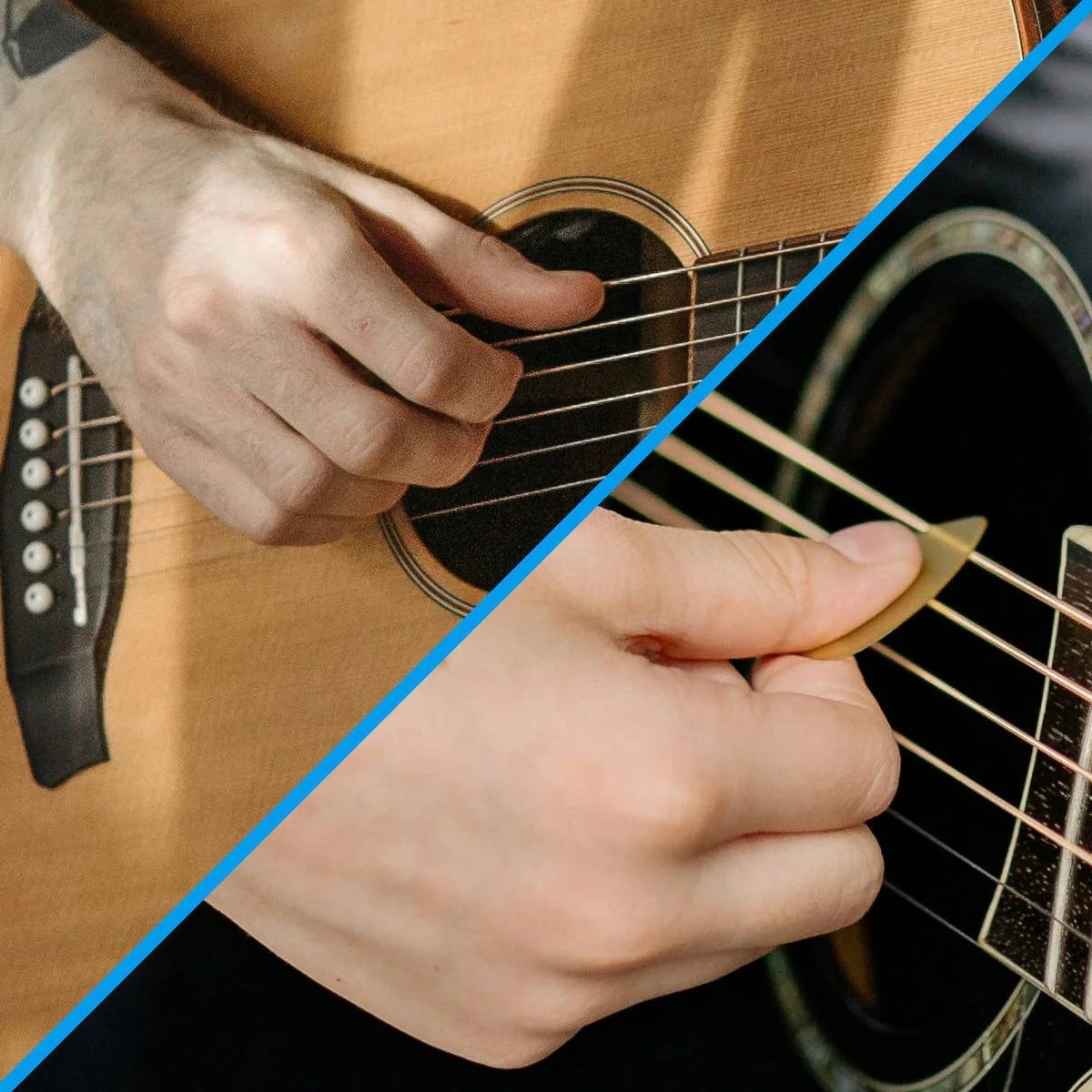
When it comes to playing the guitar, there is a huge range of styles and techniques that can be used, from drop tunings and slack key (also known as open tuning) to slides, distortion, and all sorts of pedal effects. People can play rock, classical, flamenco, and folk guitar (among other styles). Some play acoustic, while others play electric—and there are even different styles within these categories, such as steel string and classical (for acoustic) and solid body and hollow body (for electric).
When it comes to playing the guitar, perhaps the simplest and most fundamental decision is whether to use fingerstyle or flatpicking. While the majority of people use a pick for a variety of reasons, there are a number of advantages to fingerstyle playing. Ultimately, the decision boils down to a number of factors, including the sound that one is trying to achieve, the style of music being played, and even the durability of a player’s hands.
Advantages of Flatpicking
Flatpicking is the more common approach, with most beginners opting to use a pick because it is easier on their fingers and produces a louder, clearer sound. Many advanced players prefer picks because they believe that they are easier to play faster, particularly during lead solos (although there are a number of virtuoso fingerstyle soloists who have proven that it’s equally possible to play incredibly fast without a pick).
Picks are also more conducive to pick sweeping techniques and produce a different tone than fingerstyle playing—one that is often brighter, louder, and more distinct. Picks also typically create a more consistent tone since the same material is striking all of the notes (whereas fingerstyle players are using different fingers and parts of their fingers, such as the fingernails and the fleshy fingertips, to strum chords and pick individual notes.)
Another advantage of picks is that they protect your fingers from the abuse caused by impacting the strings repeatedly while playing. While there is no way to avoid strain on the fingers of the hand that presses the strings, the strumming/picking hand doesn’t have to be covered in calluses and cuts—at least not if the guitarist uses a pick.
Despite the advantages, there are a lot of people who prefer to play with their fingers, as this style provides a number of its own benefits.
Advantages of the Fingerstyle Technique
The most obvious advantage of the fingerstyle technique is that it gives players five contact points rather than only one. This allows for intricate, multi-note plucking, as well as blending chords and melodies, and even integrating a self-driven base line with the thumb while playing higher notes with the other four fingers. Fingerstyle playing is also more conducive to integrating muting, slapping, slap-strumming, and other percussive styles. It is pretty much mandatory in folk, classical, and flamenco guitar styles, which often include multiple notes plucked simultaneously. Finally, although picks have a distinctive, brighter tone, your fingers produce a warmer, more organic sound that many people enjoy.
Choosing the Best Approach
The approach that you choose depends largely on the style of music you want to play, the other artists you are emulating and covering, and your threshold for discomfort in your fingers. If you want to play power chords, heavy riffs, or copy the legendary solos of rock legends, you might opt to go with a pick. If you decide to do so, you will then have to choose what type of pick to use, as there are dozens of different shapes and sizes, each with their own advantages and disadvantages.
On the other hand, those who are looking to integrate a more folky, classical, or Spanish influence into their playing—even on the electric guitar—may prefer the benefits of fingerstyle playing.
The Hybrid Option
There’s really no reason to limit yourself to either fingerstyle or flatpicking. In fact, a number of noteworthy guitarists have adopted the hybrid approach, using a pick when it’s conducive to the sound they are looking to create, and opting for fingerpicking when it is the more suitable approach. Many of the best will even switch between the two mid-song, holding the pick between the back of two fingers (or between the knuckles of one) while picking from their fingertips. Another option is to keep the pick between your thumb and forefinger, and use the other three to pluck in a fingerstyle, which combines the best of both worlds and creates an interesting medley of the stronger pick tone and warmer finger picking sound.
In addition, some songs simply sound better with a pick, while others literally require the artist to pick with their fingers. Having the ability to do both increases your repertoire and enables you to create a broader range of more varied music.