The Rolling Stones: A Look at the Rock Band’s Greatest Influences
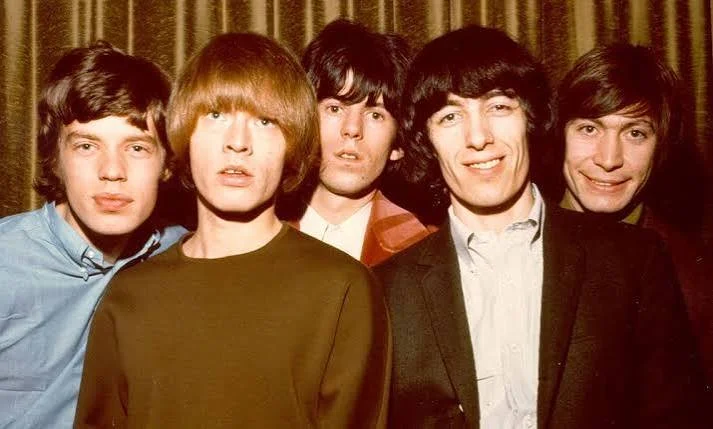
As one of the greatest rock ‘n’ roll bands ever, the Rolling Stones have nothing left to prove. However, 62 years after their debut album, the Stones are continuing to add to their legacy.
In July, the band released its second album of new original material this decade. Foreign Tongues is the product of a collaboration with producer Andrew Watt, who also helmed the boards for 2023’s Hackney Diamonds. Featuring understated guest appearances from Paul McCartney, Bruno Mars, Robert Smith, and others, Foreign Tongues has received generally favorable reviews from critics, with the Guardian saying that “paired with Hackney Diamonds, [Foreign Tongues] is comfortably their best material in decades.”
As has long been the case, at the heart of the Rolling Stones are Mick Jagger and Keith Richards, the famed duo whose conflicting but complementary musical sensibilities have sparked the band’s music for more than half a century. Despite now being in their 80s, the Glimmer Twins, as they’re known, continue to find inspiration in the music of their youth. Case in point: Foreign Tongues concludes with a cover of the Chuck Berry song “Beautiful Delilah.”
Both Jagger and Richards have noted Berry’s profound influence on the band. But Berry is far from their only inspiration. Both in the Billboard interview and elsewhere, the Stones have cited their admiration for musicians who came up before them. From rock ‘n’ roll to blues, let’s look at a few of the legendary artists who have inspired the Rolling Stones.
Chuck Berry
Chuck Berry may not have been the first rock ‘n’ roll artist (he himself acknowledged that his whole career was “one long Sister Rosetta Tharpe impersonation”). But he was perhaps the genre’s most important innovator, one who was responsible for synthesizing elements of rhythm and blues, country, and early rock ‘n’ roll to help create a musical form that broke through to the mainstream.
The Father of Rock ‘n’ Roll was born in St. Louis in 1926. He demonstrated promise as a guitarist in his youth and, in his 20s, gigged successfully around the city, building an audience who enjoyed his lively renditions of white hillbilly songs. On a trip to Chicago, Berry’s idol, Muddy Waters, advised him to approach Chess Records, which quickly agreed to record “Maybelline.” The groundbreaking song hit the Billboard pop charts and influenced everyone from Elvis to the Stones.
Berry followed “Maybelline” with “Roll Over Beethoven,” “School Day,” “Sweet Little Sixteen,” “Johnny B. Goode,” and “Reelin’ and Rockin’, ” a staggering run of hits that enshrined his place in the pantheon of American music. Later in his career, Berry capitalized on the adulation of groups like the Beatles and the Stones by recording hits like “No Particular Place to Go” and “You Never Can Tell.”
Berry’s recording career subsequently cooled following his sole No. 1 hit, 1972’s “My Ding-A-Ling,” but he continued to play live regularly, including for the 1987 documentary Hail! Hail! Rock ‘n’ Roll. The star-studded concert included in the film was conceived by Richards, who also served as musical director. Although the two guitarists famously clashed, Richards has nothing but respect for Berry, saying he was “the granddaddy of us all.”
Muddy Waters
Like Berry, the Stones idolized Muddy Waters—to the point that they named their group after one of his songs. In separate interviews with Billboard timed to the release of Foreign Tongues, both Jagger and Richards cited the massive inspiration of the Chicago bluesman, with each saying Waters was on the Mount Rushmore of Rolling Stones influences. A giant of American music, Waters was a key progenitor of Chicago blues, a subgenre that took the Delta blues of the South and electrified it, creating a template for the music of countless blues and blues-influenced artists to come.
Waters was born sometime between 1913 and 1915 in Mississippi. A harmonica player and later a guitarist, he soaked up the music of Delta blues icons like Robert Johnson. After moving to Chicago in 1943, he took up the electric guitar, which he used to record a series of hits for Chess Records in the ‘50s, among them “I’m Your Hoochie Coochie Man,” “Trouble No More,” and “Mannish Boy.” His success made him the leading light of Chicago blues.
Waters’ career faltered later in the decade, but when the British Invasion arrived, he experienced a surge in popularity. After Chess Records went bankrupt in 1975, Waters enjoyed a late-career (and late-life) resurgence, recording some of his best material and making a memorable appearance at the Band’s much-lauded farewell concert, where he performed a blistering rendition of “Mannish Boy.”
Robert Johnson
With his otherworldly falsetto, groundbreaking fingerpicking style, haunting lyrics, and unforgettable compositions, Robert Johnson became a legend whose status is unmatched in the blues. The fact he achieved this reputation with material recorded over only three sessions is a testament to his genius.
Johnson’s legend is enhanced by one of music’s great myths. The story goes that, in exchange for becoming the greatest bluesman to ever live, Johnson sold his soul to the devil. While historians have pointed to the more likely explanation that Johnson achieved his profound skill thanks to deep study with a local musician, the remarkable speed at which he mastered the guitar—along with his tortured lyrics and tumultuous life—added to the myth.
Johnson toured relentlessly and scored a hit, “Terraplane Blues,” over his eight-year career. But his life ended suddenly when he was poisoned to death, an incident that led many to believe Old Scratch had finally collected his debt. Johnson was only 27.
While he had made a name for himself over his short life, Johnson’s legend grew exponentially after his death. The Stones covered one of his songs for their 1970 album Get Yer Ya-Ya’s Out, and a two-CD box set released in 1990 that collected all of Johnson’s material sold more than a million copies.